Internal Control
Policies, procedures, and control activities designed to reduce reporting errors, misuse of assets, and control failures.
Definition
Internal control is the set of policies, procedures, and control activities designed to reduce the risk of error, fraud, unauthorized action, and unreliable reporting. It helps a business protect assets, produce cleaner accounting records, and detect problems sooner.
Why It Matters
Weak controls can lead to misstated accounts, duplicate payments, unauthorized transactions, missing assets, and slow error detection. Strong controls improve both day-to-day accounting quality and the credibility of financial statements.
How It Works In Accounting Practice
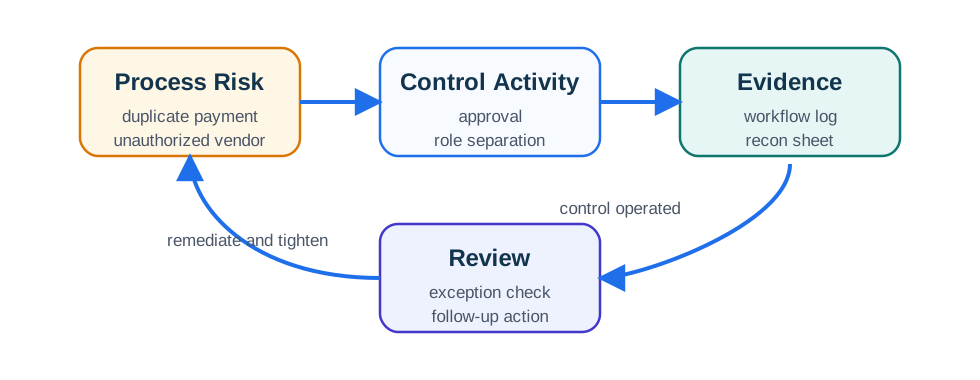
Control design starts with a process risk. Management identifies where something can go wrong, assigns a control activity to reduce that risk, and keeps evidence showing the control actually operated. Good controls are practical, reviewable, and tied to real accounting workflows instead of existing only on paper.
| Control Activity | Risk Reduced | Typical Evidence |
|---|---|---|
| Approval control | Unauthorized transaction or policy override | Signed approval, workflow log |
| Segregation of duties | One person can initiate, record, and hide an improper transaction | Separate system roles, delegated responsibilities |
| Reconciliation | Omitted, duplicated, or inaccurate balances | Reconciliation schedule, reviewer sign-off |
| Access control | Unauthorized edits to accounting records | Permissions matrix, access log |
| Review control | Unusual balances or trends go unexplained | Variance review, exception report, management note |
Simple Example
In a vendor-payment process, control quality improves when key duties are separated:
| Process Step | Assigned Role | Control Purpose |
|---|---|---|
| Create vendor record | Procurement or vendor master admin | Reduces fake-vendor risk |
| Approve invoice | Department manager | Confirms the purchase was valid |
| Record payable | Accounts payable staff | Keeps recognition separate from approval |
| Release payment | Treasury or authorized finance approver | Prevents one person from completing the full payment cycle |
Common Confusions
Internal control does not mean every risk is eliminated. Good controls provide reasonable assurance, not perfect protection. It is also broader than fraud prevention alone because it includes reporting accuracy, authorization discipline, and timely error detection.